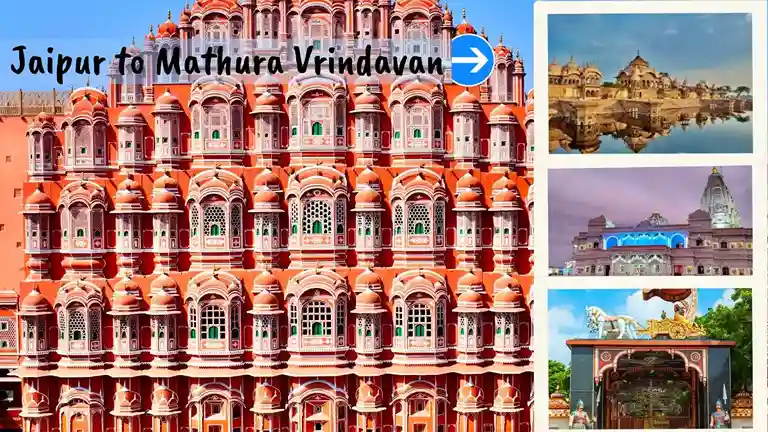


The Braj Chaurasi Kos Yatra is the most revered pilgrimage for Lord Krishna devotees, covering almost 252 kilometers (84 Kos) in Mathura, Vrindavan, Barsana, Nandgaon, Gokul, and Govardhan. The Yatra links all divine sites associated with the boyhood and adolescence of Lord Krishna. Devotees worship holy temples, ancient ponds and sacred forests while reciting the name of Krishna and conducting rituals. The Yatra imparts inner peace and a sense of divine proximity to the Lord. It is as much a physical pilgrims’ tour as an intensely spiritual experience through which devotees can learn about Krishna’s life and teachings.
Meaning and Importance of Braj Chaurasi Kos Yatra
The “Chaurasi Kos” is interpreted as 84 Kos, which stands for about 252 kilometers, covering the full expanse of Braj Bhoomi where Lord Krishna conducted his divine activities (Leelas). Each and every corner of this place bears testimony of Krishna’s childhood—playing with friends, raising Govardhan Hill, and passing happy moments with Radha and Gopis. Doing the Yatra is said to relieve devotees of previous sins and bestow blessings, peace, and prosperity. Most pilgrims take it as an act of worship or as a thanksgiving to Lord Krishna, and some others do it as a family commitment transferred from generation to generation.
Best Season to Do the Chaurasi Kos Yatra
The best season to do the Braj Chaurasi Kos Yatra is from October to March. It is during this time that the weather is very pleasant and ideal for walking for long hours or traveling in comfort by car. Most of the devotees begin the Yatra during auspicious moments such as Janmashtami, Holi, Radhashtami, or Kartik Purnima. These seasons have an additional spiritual feeling, with temples decorated nicely and resonating with kirtans and bhajans. Do not conduct the Yatra during summer (April–June) since it can be very hot with temperatures above 40°C, and also during the monsoon season (July–September) when roads can be muddy and dangerous to drive on.
Duration and Mode of Travel
A full Braj Chaurasi Kos Yatra typically takes 7 to 10 days to finish depending on your path and speed. Devotees used to walk the whole circuit barefoot, singing “Radhe Radhe” in olden times, but now people prefer to ride in Tempo Travellers, cars, or buses for convenience. Walking pilgrims tend to get up early in the morning to travel far before the scorching sun at noon. If short of time, you can do the mandatory route in 4 or 5 days by road. Walking or driving, the most important thing is to keep your faith and devotion intact along the way.
Preparations Before the Yatra
Physical health: Start light walking a few days before your pilgrimage.
Reservations: Reserve your stay in Mathura or Vrindavan in advance, especially during festivals.
Transportation: Take a good taxi, Tempo Traveller, or go for a group Yatra.
Things to bring: ID cards, medicines, puja materials, flashlight, reusable bottle, slippers, and light clothing.
Attire: Put on simple and comfortable cotton attire appropriate for temples.
Cash: Have some extra cash on hand for prasad and contributions. The majority of tiny temples don’t accept cards.
Read More: How to Book VIP Darshan at Banke Bihari Temple Vrindavan
Complete 7-Day Itinerary for Braj Chaurasi Kos Yatra
Below is a suggested 7 Day Chaurasi Kos Yatra itinerary covering all major holy sites.
Day 1: Arrival in Mathura – The Birthplace of Lord Krishna
Arrive in Mathura by train or road.
Worship at Vishram Ghat’s Yamuna Aarti, Dwarkadhish Temple, and Shri Krishna Janmabhoomi Temple.
Holy dip in the Yamuna River.
Evening: Participation in Bhajan Sandhya near temple premises.
Stay: Mathura.
Day 2: Gokul and Mahavan – Early Life of Krishna
Morning visit to the town of Gokul where baby Krishna was born.
Visit Raman Reti, Chintaharan Mahadev, Brahmand Ghat, and Nand Bhavan.
Go to Mahavan, which is supposed to be the biggest village of ancient Braj.
Take a brief walk on Parikrama Path here.
Rest: Mathura or Gokul.
Day 3: Govardhan and Jatipura – The Sacred Hill
Go to Govardhan Hill (22 km from Mathura).
Do Govardhan Parikrama (21 km) on foot or vehicle.
Go to Radha Kund, Shyam Kund, Kusum Sarovar and Mansi Ganga.
Do not miss the Daan Ghati Temple.
Provide Giriraj Maharaj darshan with tulsi and milk.
Stay: Govardhan.
Day 4: Barsana and Nandgaon – The Abode of Radha and Krishna’s Parents
Morning visit to Barsana, birthplace of Radha Rani.
Climb the Brahmachal Hill to Radha Rani Temple.
Visit Kusum Sarovar, Mor Kutir, and Sankari Khor.
Proceed to Nandgaon, where Nand Bhavan Temple is located on a hill.
Attend the evening Aarti at Nand Bhavan.
Stay: Barsana or Nandgaon.
Day 5: Vrindavan – The Divine Leela Bhoomi
Visit to Vrindavan (50 km from Barsana).
Visit Banke Bihari Temple, ISKCON Temple, Radha Raman Temple, Madan Mohan Temple, and Prem Mandir.
Walk along Seva Kunj and Nidhivan, where Krishna performed Ras Leela.
Evening light show at Prem Mandir.
Stay: Vrindavan.
Day 6: Raval, Dauji, and Baldeo
Visit Raval, the birthplace of Radha Rani.
Visit Dauji Temple (Baldeo), which is dedicated to Lord Balarama.
Visit Mata Revati Temple nearby.
Relax at Yamuna Ghat for peaceful meditation.
Remain: Mathura or Baldeo.
Day 7: Back and Last Darshan
Morning darshan at Keshav Dev Temple in Mathura.
Visit adjacent Chamunda Devi Temple and local ashrams.
Buy sacred souvenirs such as Tulsi malas and Radha-Krishna idols.
Return home with sacred blessings and sweet memories.
Significant Temples and Sacred Places Along the Route
The Yatra features a number of holy sites throughout the Braj area:
Mathura – Krishna Janmabhoomi, Dwarkadhish Temple, Vishram Ghat
Gokul – Nand Bhavan, Raman Reti, Chintaharan Mahadev
Govardhan – Daan Ghati, Radha Kund, Kusum Sarovar, Mansi Ganga
Barsana – Radha Rani Temple, Sankari Khor, Mor Kutir
Nandgaon – Nand Bhavan, Pavan Sarovar
Vrindavan – Banke Bihari, ISKCON, Madan Mohan, Seva Kunj, Nidhivan, Prem Mandir
Baldeo – Dauji Temple, Revati Mata Temple
All places are steeped in devotion and history. Pilgrims spend time in offering prayers, attending local kirtans, and soaking up the divine energy that permeates this sacred soil.
Food and Accommodation During Chaurasi kos Yatra
Food in Braj Bhoomi is plain and sattvic, cooked without onion or garlic. Prasad bhojan is free in many temples for the devotees. Khichdi, roti, sabzi, and halwa are common items on the menu. A variety of ashrams, dharamshalas, and guesthouses are available in Mathura and Vrindavan for reasonable accommodation. In Govardhan and Barsana, the accommodations are modest but adequate for pilgrims.It is best to book rooms in advance for holidays like Holi and Janmashtami. Before completing your stay, always check the basic amenities and cleanliness.
Medical and Emergency Facilities
Mathura and Vrindavan contain good hospitals and clinics like:
Rama Krishna Mission Hospital (Vrindavan)
Brij Healthcare Hospital (Mathura)
Baldeo Primary Health Center (Baldeo)
Maintain emergency helpline numbers:
Police: 112
Ambulance: 108
Tourist Helpline: 1363
Final Words and Blessings
Completing Braj Chaurasi Kos Yatra is a divine boon for all devotees. Every temple, pond, and road path reminds you of the divine love of Krishna and the simplicity of divine things. This Yatra imparts patience, devotion and the importance of pure faith. Whether done on foot or by car, the objective is to link your heart with Krishna’s divine presence. As you finish the circuit, you will feel refreshed and calm and be ready to take the message of love, passion and harmony back home.
May your Braj Yatra be filled with divine grace and the sweet chant of “Radhe Radhe.”